
In a world where every sentence can become a headline and every joke can become a national conversation, the line between entertainment and responsibility has become increasingly difficult to define.
For decades, late-night television has built its identity around satire, humor, and commentary. Comedians have used their platforms to challenge politicians, criticize public figures, and reflect the mood of society. Supporters argue that satire is one of the foundations of free expression — a way to question power and expose hypocrisy.
But critics have long raised another question:
When does humor cross the line from criticism into personal attack?
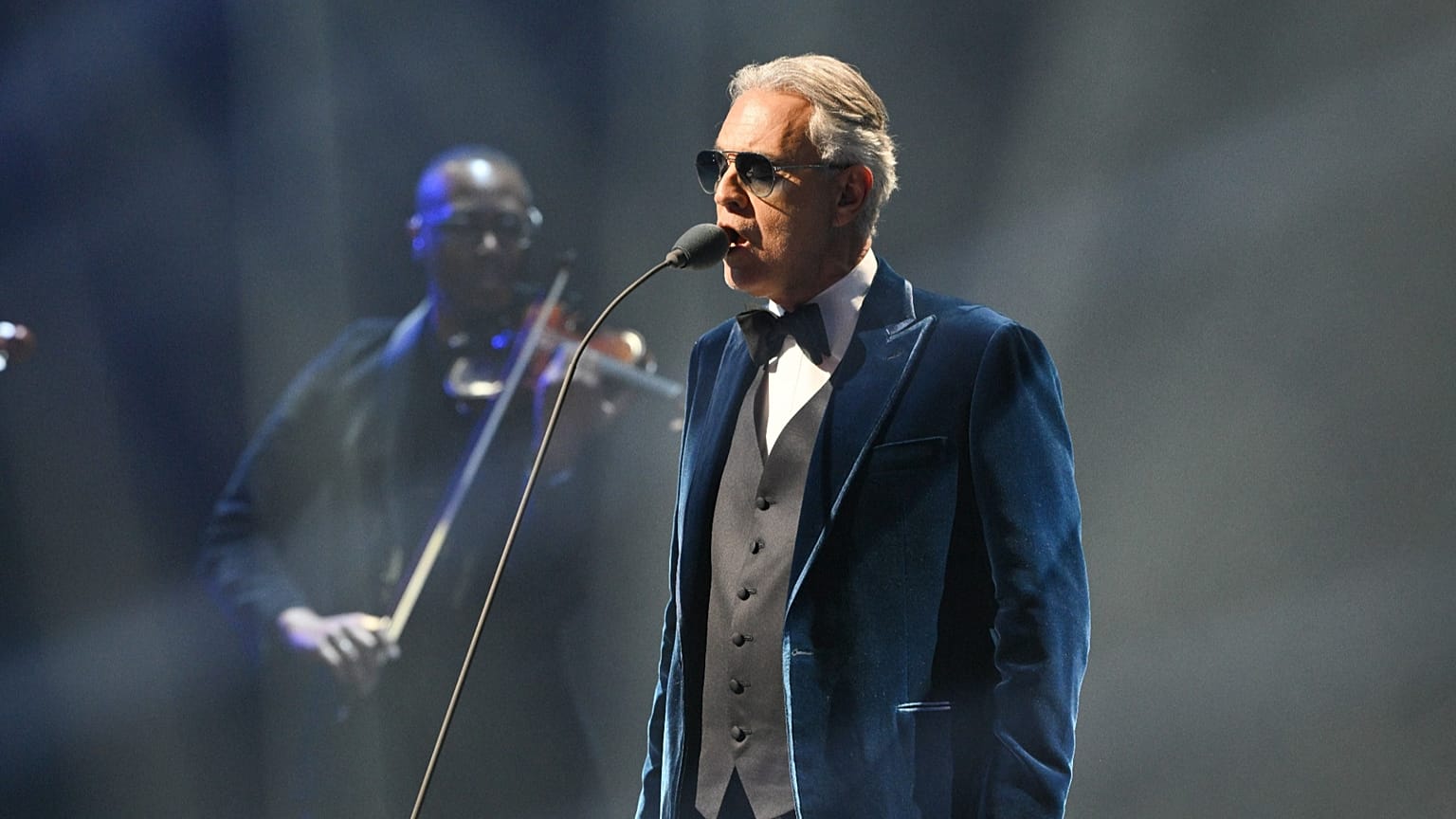
That question sits at the center of this imagined controversy involving legendary tenor Andrea Bocelli and the world of late-night television.
According to the fictional scenario, what began as another routine entertainment controversy suddenly became a much larger debate when Bocelli stepped forward with a message about respect, dignity, and the responsibility that comes with a public platform.
He did not approach the issue as a politician.

He did not speak as a media personality.
He spoke as an artist.
A man whose career had been built on emotion, humanity, and the belief that words have the power to connect people across differences.
The imagined statement immediately captured attention because of the contrast between the worlds involved.
On one side was the fast-moving world of entertainment, where controversy often drives attention and where sharp humor can become part of the performance.
On the other side was Bocelli, whose public image has long been associated with elegance, classical music, and emotional expression.
His message focused on a simple idea:
Public figures are still human beings.
Behind every headline is a person.
Behind every public image is a life, a family, and a personal story.
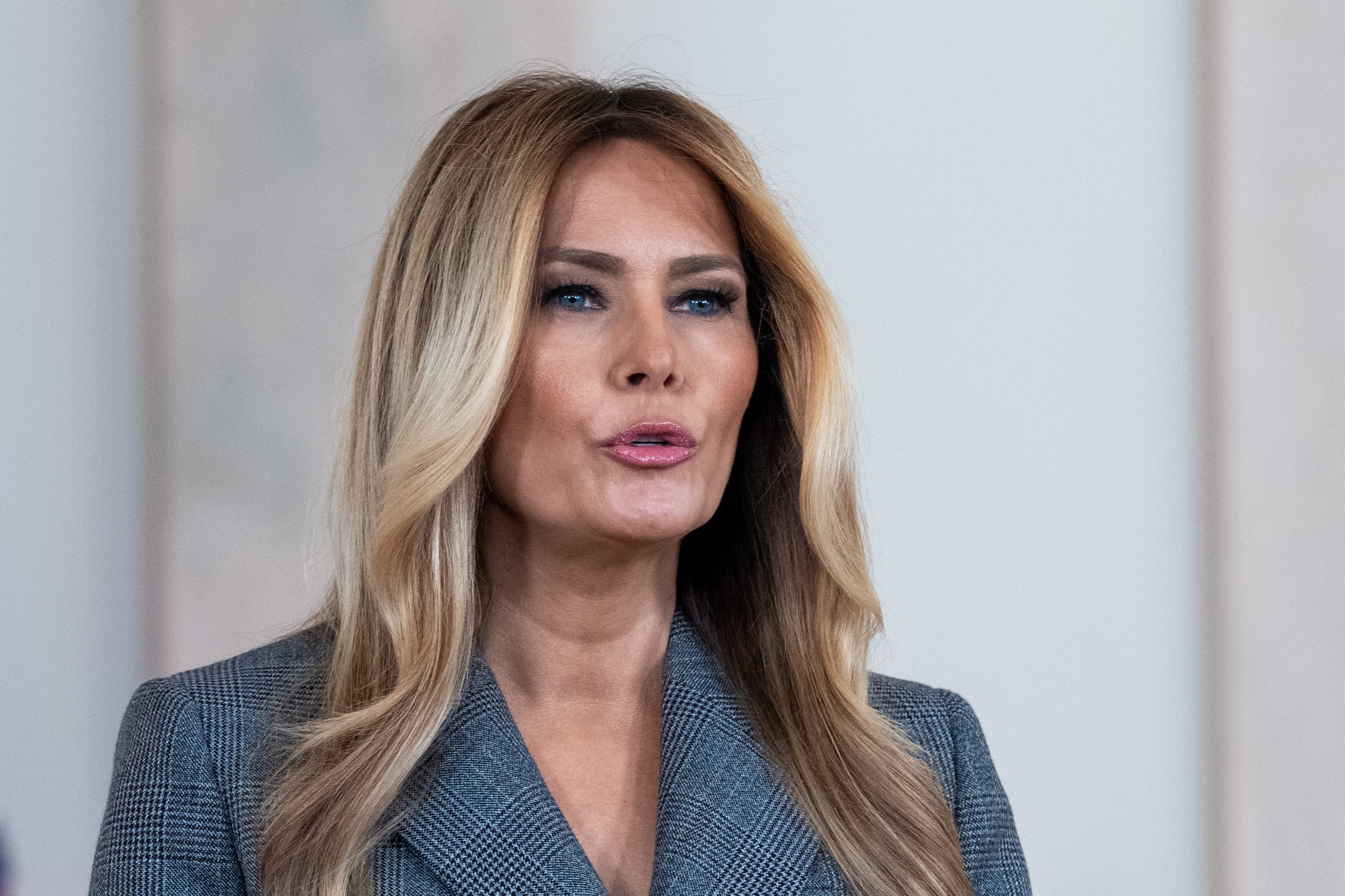
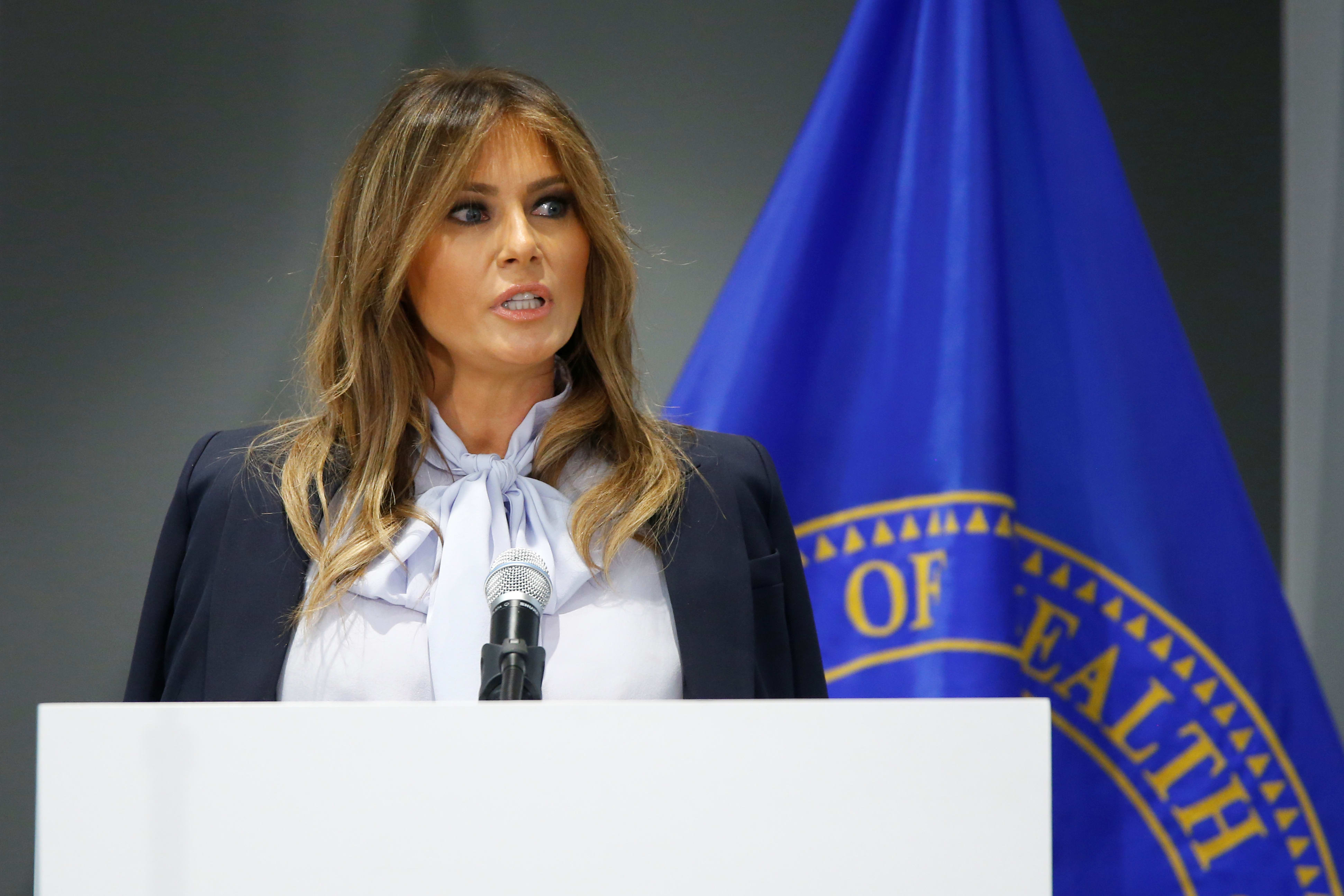
The debate surrounding Melania Trump has always reflected the complicated reality of modern fame. As a former First Lady, she became one of the most recognizable women in the world. Her clothing choices, public appearances, speeches, and personal decisions were constantly analyzed.
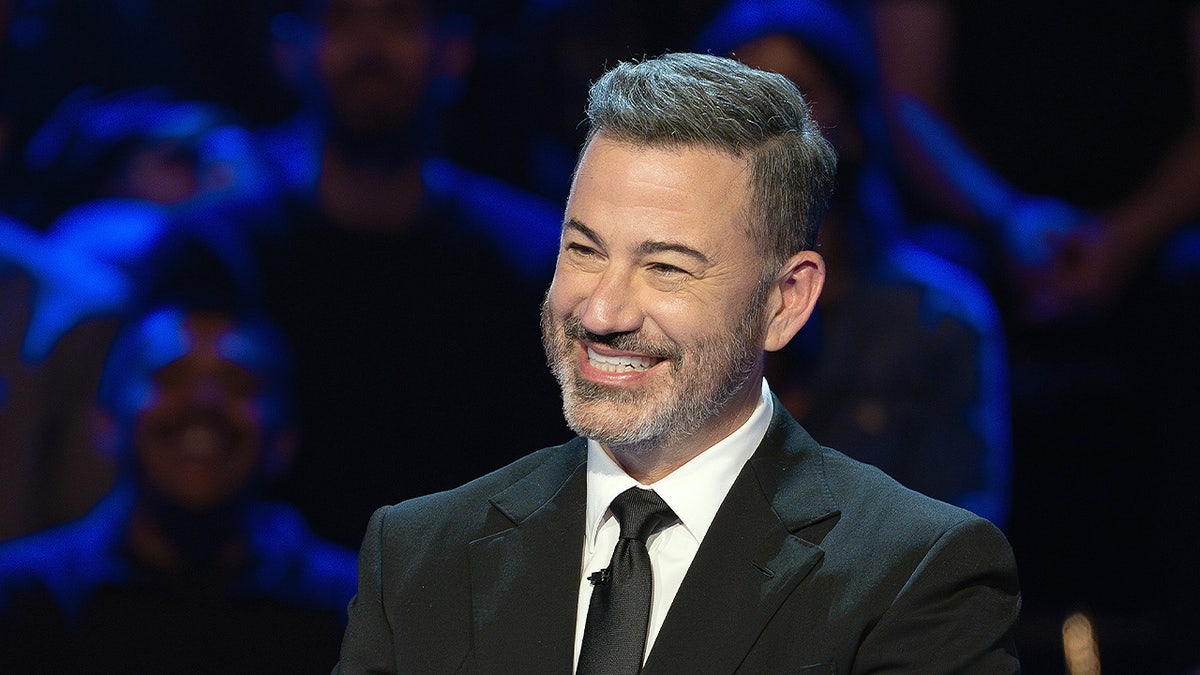
:max_bytes(150000):strip_icc():focal(770x272:772x274)/jimmy-kimmel-live-081925-f464963309ba49c186c3d27c88a01acc.jpg)
Like many people in highly visible positions, she became both admired and criticized.
Supporters saw her as graceful, private, and composed.
Critics questioned her public role and choices.
That is the reality of public life.
Famous people are often viewed through completely different lenses depending on who is watching.
But the imagined intervention from Bocelli focused on something beyond politics.
It focused on personal dignity.
The central argument was not that public figures should be protected from all criticism.
Rather, it was the belief that criticism and cruelty are not the same thing.
A society can disagree strongly while still maintaining respect.
A comedian can challenge ideas without reducing a person to a target.
A television program can be entertaining without forgetting basic humanity.
This tension has existed throughout the history of entertainment.
Satire has always walked a difficult path.
The best satire challenges powerful people and encourages audiences to think.
But when humor becomes purely personal, some argue that it loses its purpose and becomes simple humiliation.
That is where many cultural debates begin.
Where is the boundary?
Who decides when a joke becomes harmful?
And how should public figures respond when they believe that boundary has been crossed?
In the imagined moment, Bocelli’s response became powerful because of his calm approach.
He did not rely on anger.
He did not use insults.
Instead, he delivered a message built around principle.
That style reflected something many people associate with his music: emotion without chaos.
A powerful voice does not always need to be loud.
Sometimes the strongest messages are delivered with control.
Throughout his career, Bocelli has demonstrated the ability to move audiences without aggression. His performances have crossed languages, cultures, and generations. His voice became famous not because it demanded attention, but because it created connection.
That same quality made the imagined statement feel significant.
He represented the idea that compassion itself can be a form of strength.
The fictional controversy also raises broader questions about celebrity influence.
When famous individuals speak about social issues, their words often reach millions of people instantly. That influence can be used to promote causes, encourage discussion, or challenge behaviors they believe are harmful.
But influence also creates responsibility.
The larger the audience, the greater the impact.
A sentence spoken on television can travel across the world within minutes.
A joke can become a movement.
A criticism can become a cultural battle.
This is why public conversations involving celebrities often become much larger than the original moment.
People are not only debating the words spoken.
They are debating values.
What kind of society do we want?
What kind of conversations do we want to encourage?
How should people with powerful platforms use them?
The imagined reaction to Bocelli’s statement represented a desire many people share: the desire for public conversations that are passionate but also respectful.
A society does not become stronger when everyone agrees.
It becomes stronger when disagreement can exist without destroying basic respect.
The story also highlights the changing relationship between entertainment and audiences.
In previous generations, viewers consumed television more passively. Today, audiences immediately respond, analyze, and debate online. Every moment can become a global conversation.
A controversial joke can create backlash.
A powerful statement can create support.
A single clip can influence public opinion.
This new reality means entertainers and networks face increasing pressure to consider not only what they say, but how audiences interpret it.
The imagined involvement of Andrea Bocelli represents a different kind of celebrity voice.
Not one built around controversy.
Not one built around confrontation.
But one built around values.
His message, in the fictional account, was ultimately about a principle that extends beyond any individual:
Human beings should not become disposable simply because they are famous.
They should not lose their dignity because they are public figures.
They should not become targets simply because people disagree with them.
At the same time, public figures also exist in a world where scrutiny is unavoidable. Leaders, celebrities, and influential individuals will always face criticism.
The challenge is finding the balance between accountability and respect.
Between free expression and responsibility.
Between humor and harm.
That balance has never been simple.
And it likely never will be.
But conversations like this continue because they reveal something important about society itself.
They show what people value.
They show what people are willing to defend.
They show the kind of public culture people hope to create.
In the end, the imagined moment was not only about Andrea Bocelli, Melania Trump, or a television program.
It was about something much larger.
It was about the power of words.
The responsibility of influence.
And the reminder that even in a world filled with disagreement, dignity still matters.
Because a voice is not measured only by how loudly it speaks.
It is measured by the message it carries.
And sometimes, the most powerful voices are the ones that remind the world of something simple:
Respect is not weakness.
Kindness is not silence.
And humanity should never become the price of entertainment.


0 Comment:
Enregistrer un commentaire