
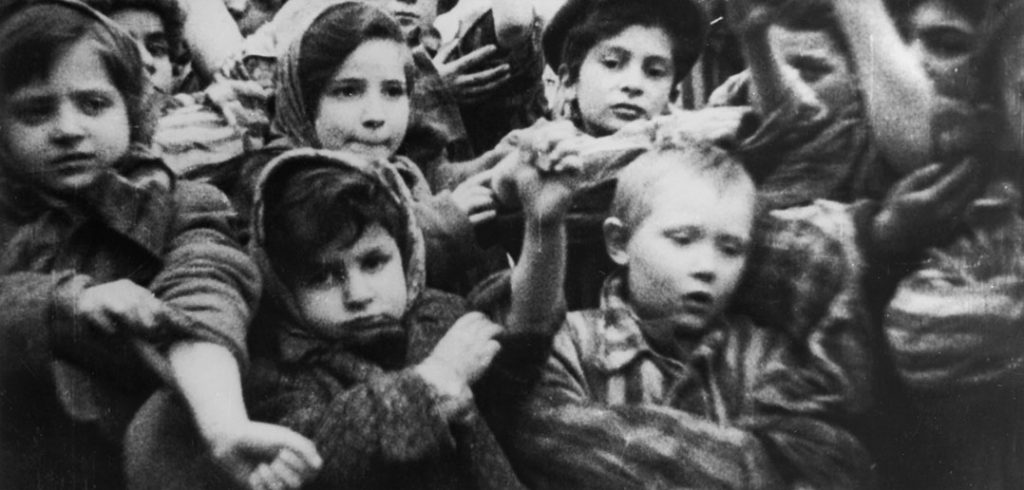
The Morning When Childhood Disappeared On June 2, 1944, inside Auschwitz II-Birkenau, a separate line was formed during a selection process that would become one of the countless heartbreaking moments in the history of the Holocaust. Among those placed into that line were children — boys and girls who were too young to understand the full horror surrounding them. They stood close together, surrounded by a world that had already taken away their homes, their families, and the simple safety that every child should know. They did not understand why they had been separated from others. They did not know why adults were being moved in different directions. They did not know why the atmosphere around them carried such a deep and frightening silence. To them, it was another confusing moment in a place where every day had become filled with confusion, uncertainty, and fear. Some children held hands tightly, searching for comfort from the only people who truly understood what they were experiencing — each other. Others looked through the crowd, desperately searching for familiar faces that had suddenly disappeared. They looked for their mothers, their fathers, their brothers, their sisters, or anyone who could explain what was happening. But many of the people they were searching for were already gone. The children had already experienced a world where everything familiar had been taken away. They had been removed from their homes, separated from normal life, and forced into a place where even adults struggled to understand what was happening. Yet even inside such darkness, they remained children. They still needed reassurance. They still wanted to believe someone would protect them. They still hoped that somehow everything would return to normal. Among them, an older child tried to comfort the younger ones. He spoke softly, telling them to remain calm and stay together. Perhaps he wanted to appear brave. Perhaps he wanted to protect them from fear. But the truth was that even he did not understand what was coming. He was only a child trying to comfort other children in a place where no child should ever have been.
A Line Filled With Questions No Child Should Have To Ask The guards moved quickly through the selection area, offering no explanations and no answers to the frightened questions that existed silently in the minds of those standing there. There were only gestures, commands, and movements that the children were expected to follow. They followed not because they were fearless, but because they had not yet been given a reason to understand what fear truly meant. They followed because, throughout their short lives, adults had always been the ones who provided direction and protection. They followed because children naturally believe that somewhere there must be someone who understands what is happening and someone who will eventually make everything right. But Auschwitz was a place where the rules of childhood no longer existed. These children had already experienced unimaginable suffering. They had known hunger, separation, fear, and the disappearance of people they loved. Yet the full reality of the camp remained beyond what many of them could comprehend. They stood there carrying the last fragile pieces of childhood they still possessed — a sibling’s hand, a comforting voice, a memory of home, and the hope that someone would come to save them. They were not walking forward because they accepted what was happening. They were walking forward because they were children placed into a situation no child should ever have to face.

The Children Who Were Reduced To Numbers But Never Lost Their Humanity Auschwitz was part of the Nazi regime’s systematic persecution and murder of millions of innocent people across Europe. Among those who were transported there were countless children who had done nothing wrong except being born into families targeted by hatred. The children who arrived at Auschwitz were never just numbers, even though the Nazi system attempted to reduce them to exactly that. They were sons and daughters. They were brothers and sisters. They were children who had favorite songs, favorite toys, favorite foods, and dreams about the future. Some wanted to become teachers. Some wanted to become doctors. Some dreamed of creating families of their own one day. Some simply wanted to continue playing with friends and enjoying the ordinary moments of childhood. Before Auschwitz, they had personalities, hopes, and futures waiting for them. The Nazi system attempted to erase those identities and replace them with numbers and categories. It attempted to make the world forget that every person who entered those camps was a complete human being with a story. But photographs, survivor testimonies, and historical records continue to remind us of the truth. These were not statistics. They were not symbols. They were children whose lives had meaning and whose futures were stolen from them.
The Silence After The Questions Were Gone One of the most painful truths about Holocaust history is that many victims did not fully understand what was happening until it was too late. The children standing in that line did not know the full meaning of the selection process. They did not understand the system surrounding them. They did not know what decisions were being made about their lives. They were simply waiting. Waiting for instructions. Waiting for answers. Waiting for someone to explain why the world they knew had suddenly disappeared. That innocence makes their stories even more heartbreaking. Adults who had witnessed the horrors of the camps often understood the danger surrounding them, but children still carried the natural belief that the world followed certain rules. Children believe that parents will protect them. Children believe that adults know what to do. Children believe that tomorrow will come. The Holocaust destroyed those assumptions for millions of children across Europe. It forced them into a reality that no young person should ever have to understand.
Remembering The Children Who Never Had The Chance To Grow Up The children who stood together at Auschwitz on June 2, 1944, represented thousands upon thousands of young lives interrupted by hatred and violence. Many of them never returned home. They never finished school. They never celebrated birthdays surrounded by family. They never experienced the ordinary moments that create a lifetime of memories. They never discovered who they might become. They never had the chance to build the futures they once imagined. Remembering them is not only about remembering how they died. It is about remembering how they lived before they became victims of history. Before Auschwitz, they were children with families, personalities, dreams, and hopes. They laughed. They played. They asked questions. They imagined tomorrow. Their entire existence was not defined by the moment they entered the camp. Their lives began long before that day, and those lives mattered.
The Responsibility Of Memory Stories like this remain important because history is not only made of dates, places, and events. History is made of people. It is made of individual lives, families, dreams, and experiences. Behind every number was a person. Behind every statistic was a name. Behind every tragedy was someone who was loved by others. The children of Auschwitz cannot speak for themselves today. Their voices were taken away too soon. But their memories remain through survivors, photographs, documents, and the responsibility of future generations to remember. The line formed at Auschwitz was not simply a historical event. It was a warning about what can happen when hatred is allowed to grow and when human beings are denied their dignity. It reminds the world that children should never become victims of cruelty created by adults. Every child deserves the opportunity to grow, dream, learn, and discover the person they are meant to become.
The Lasting Lesson From The Children’s Line The children who stood in that line at Auschwitz did not know what the future held. They only knew they were uncertain and afraid. They held hands because they needed comfort. They stayed close because they needed each other. They followed because they still believed someone might explain what was happening. Their innocence was one of the most painful reminders of what was lost during the Holocaust. Yet their story also reveals something deeply human. Even in the darkest places, people continue searching for connection. A child reaching for another child’s hand represents the compassion and humanity that cruelty attempted to destroy. The world remembers Auschwitz not only because of the suffering that occurred there, but because of the millions of lives that deserved to continue. Those children were more than victims of history. They were children who once laughed, dreamed, loved, and hoped. The most important way to honor them is not only to remember how they died, but to remember the lives they should have been allowed to live.


0 Comment:
Enregistrer un commentaire