Summer Fruits That Refresh, Hydrate, and Nourish Your Body
Nothing says summer quite like fresh, juicy fruit. During the hottest months of the year, fruits not only satisfy our sweet cravings but also help keep us hydrated and energized. Rich in vitamins, minerals, antioxidants, and water, summer fruits are among the healthiest foods you can add to your diet.
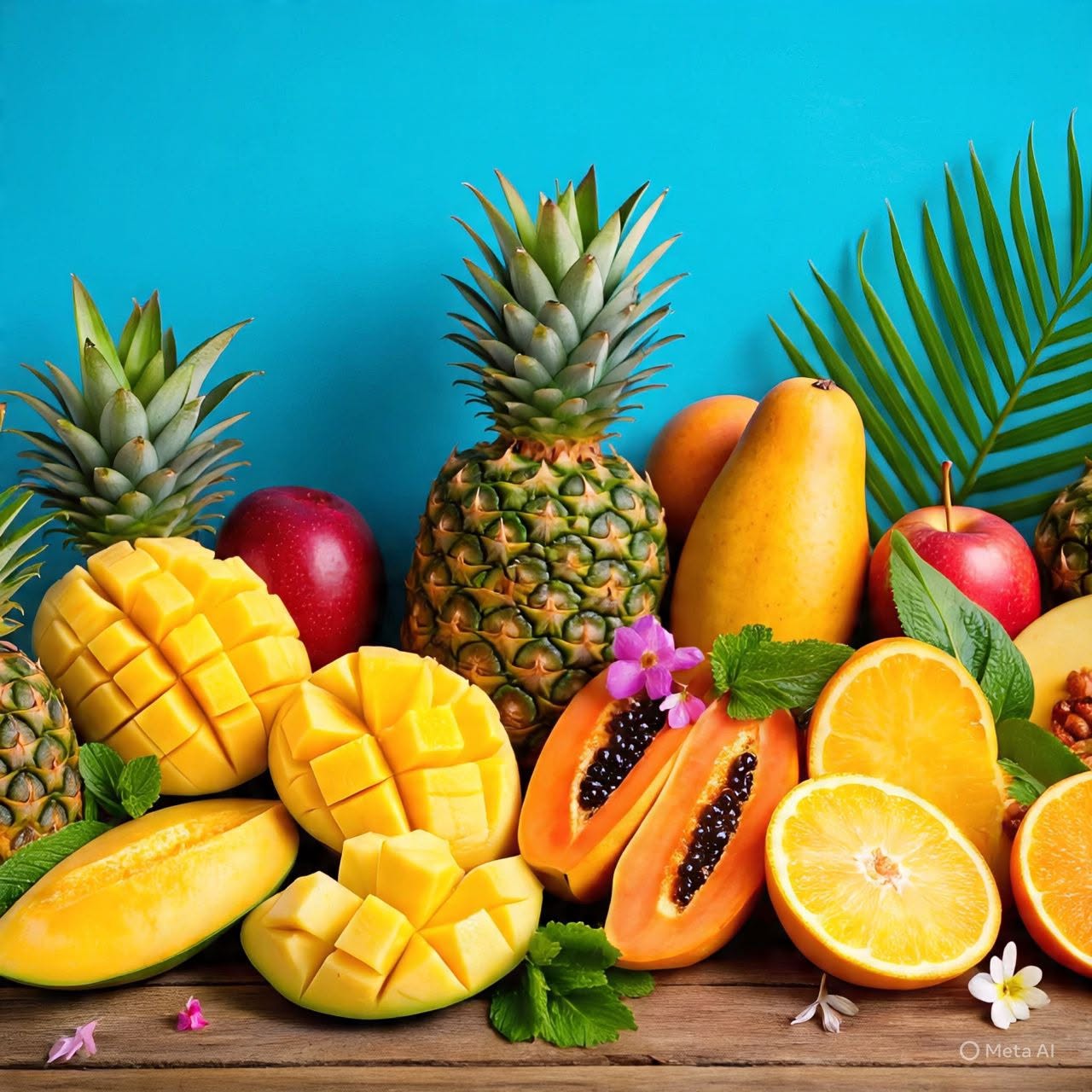
Among the most popular are pineapple, papaya, orange, and apple. Each offers its own unique flavor, nutritional profile, and health benefits. Let's take a closer look at these delicious fruits and discover why they deserve a place on your table this summer.
🍍 Pineapple – The Tropical Refreshment
Appearance
Pineapple is easily recognized by its rough, thorny green-brown skin and its crown of long green leaves. Inside, the fruit reveals juicy golden-yellow flesh with a sweet tropical aroma.
Origin
Pineapple originated in South America, particularly in regions that are now part of Brazil and Paraguay. Today it is cultivated throughout tropical and subtropical regions worldwide.
Taste
The flavor of pineapple is a delightful combination of sweetness and acidity. Its juicy texture and refreshing taste make it one of the most popular tropical fruits.
Health Benefits
Pineapple is rich in nutrients that support overall health, including:
Vitamin C, which supports the immune system.
Manganese, essential for healthy bones and metabolism.
Antioxidants that help protect cells from oxidative stress.
Bromelain, a natural enzyme that may aid protein digestion.
One of pineapple's greatest advantages is its high water content. Approximately 86% of the fruit consists of water, helping support hydration during hot summer days.
How to Eat It
Pineapple can be enjoyed in many ways:
Freshly sliced into rings.
Cut into cubes for fruit salads.
Added to smoothies.
Served chilled as a healthy snack.
Grilled for a delicious dessert.
Shopping Tip
A ripe pineapple often gives off a sweet fragrance at the base. If there is little or no aroma, the fruit may not yet be fully ripe.
🧡 Papaya – The Angel Fruit
Appearance
Papaya has an oval or elongated shape with smooth skin that turns yellow-orange as it ripens. Inside, the flesh is bright orange and contains numerous small black seeds in the center.
Origin
Papaya originated in Central America and southern Mexico but is now grown in tropical climates around the world.
Taste
Papaya has a mild sweetness often compared to a combination of apricots, melon, and peaches. Its soft texture makes it easy to enjoy fresh.
Health Benefits
Papaya is often called the "angel fruit" because of its impressive nutritional profile.
It contains:
Vitamin C for immune support.
Vitamin A for healthy vision and skin.
Folate, important for cell growth and development.
Dietary fiber for digestive health.
Papain, a natural enzyme that helps break down proteins and supports digestion.
Papaya is also relatively low in calories, making it a great choice for those seeking nutritious foods without excessive calories.
How to Eat It
To enjoy papaya:
Cut it in half.
Remove the seeds with a spoon.
Slice or cube the flesh.
Serve chilled for maximum freshness.
Many people enjoy papaya on its own, in fruit salads, or blended into smoothies.
Shopping Tip
Choose papayas with yellow-orange skin. A completely green papaya is usually not yet ripe and may have less sweetness.
🍊 Orange – The Vitamin C Champion
Appearance
Oranges are round citrus fruits with a bright orange peel and juicy segments inside.
Origin
The orange is believed to have originated in China thousands of years ago before spreading across the globe.
Taste
Oranges combine sweetness with a pleasant tangy flavor, making them one of the most refreshing fruits available.
Health Benefits
Oranges are famous for their high vitamin C content, but they provide much more than that.
They contain:
Vitamin C, which supports immunity.
Potassium, important for muscle and nerve function.
Folate, which contributes to healthy cell production.
Antioxidants that help protect the body from free-radical damage.
Fiber, especially when eaten whole rather than as juice.
Because of their high water content, oranges are also excellent for hydration.
How to Eat Them
Oranges can be enjoyed:
Fresh as a snack.
Juiced for a refreshing drink.
Added to fruit salads.
Combined with other tropical fruits.
Eating the whole fruit provides more fiber than drinking juice alone.
🍎 Apple – The Everyday Super Fruit
Appearance
Apples come in many varieties, but one of the most recognizable is the bright red apple with smooth, shiny skin.
Origin
Apples have been cultivated for thousands of years and are now grown in many countries worldwide.
Taste
Depending on the variety, apples may be sweet, tart, or a balance of both. Their crisp texture makes them satisfying and refreshing.
Health Benefits
Apples are packed with valuable nutrients:
Fiber, particularly pectin, which supports digestive health.
Vitamin C.
Antioxidants found mainly in the skin.
Natural plant compounds that support heart health.
The old saying "an apple a day keeps the doctor away" may be an exaggeration, but apples certainly contribute to a healthy diet.
How to Eat Them
Apples are among the most versatile fruits:
Eaten fresh.
Sliced into salads.
Added to oatmeal.
Baked into desserts.
Blended into smoothies.
For maximum nutritional benefit, many experts recommend eating apples with their skin.
Why Summer Fruits Are So Important
Summer temperatures increase the body's need for hydration. Fruits such as pineapple, papaya, oranges, and apples contain significant amounts of water that help support fluid balance.
In addition, these fruits provide:
Natural sugars for energy.
Vitamins and minerals for overall health.
Fiber for digestive wellness.
Antioxidants that help protect cells.
Including a variety of fruits in your diet can help you meet your nutritional needs while enjoying delicious flavors.
The Psychology of Summer Colors
The bright colors often associated with tropical fruits are not only attractive but also influence our mood.
A combination of:
Blue backgrounds representing freshness and water.
Yellow pineapples symbolizing sunshine and energy.
Orange papayas suggesting warmth and vitality.
Bright oranges and red apples creating feelings of happiness and health.
These vibrant colors are often linked to positive emotions, making summer fruits visually appealing as well as nutritious.
Final Thoughts
Pineapple, papaya, orange, and apple are more than just delicious fruits. They provide hydration, vitamins, minerals, fiber, and antioxidants that support overall well-being.
Whether enjoyed fresh, blended into smoothies, added to salads, or served as healthy snacks, these fruits can help make summer both tastier and healthier.
So the next time you prepare a fruit plate, remember that every colorful slice offers more than flavor—it delivers nutrients that help your body stay refreshed, energized, and ready to enjoy the season.


0 Comment:
Enregistrer un commentaire